
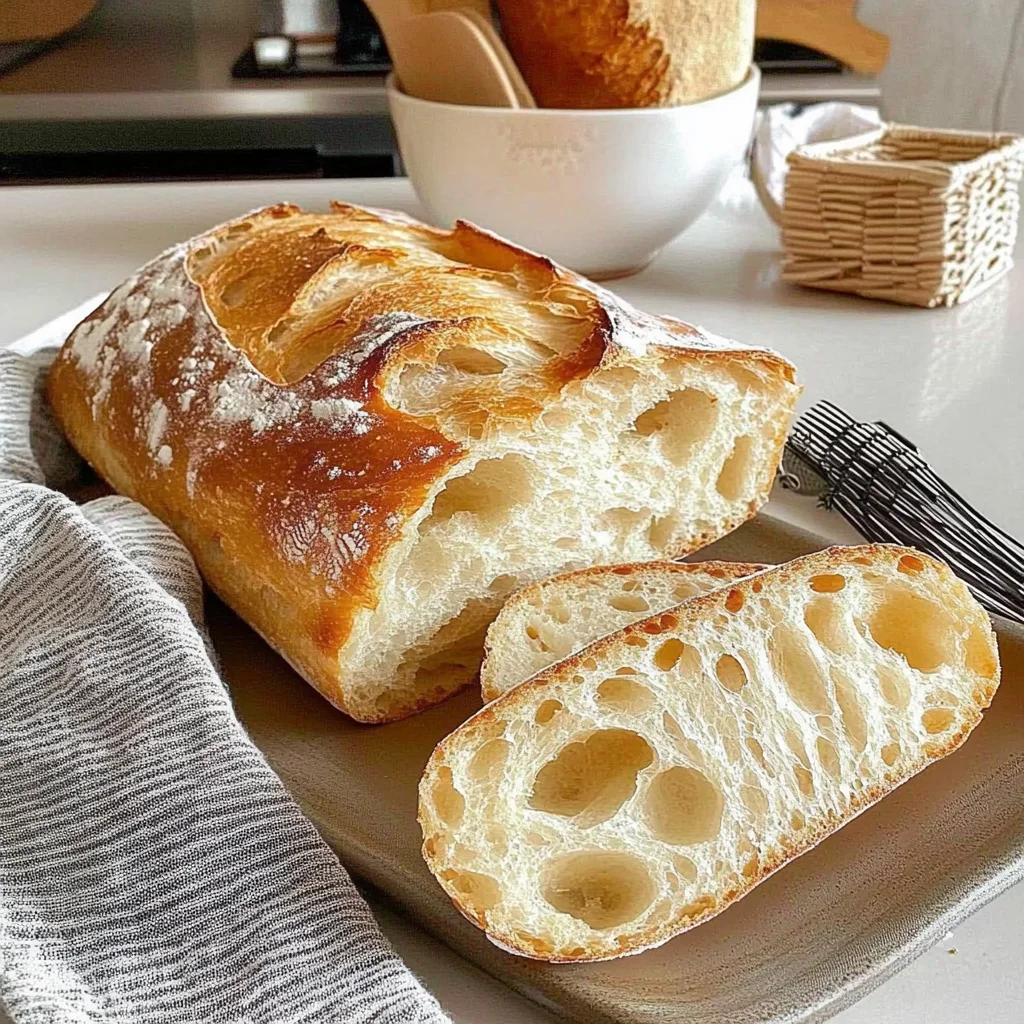
Picture the scent of freshly baked ciabatta bread wafting through your kitchen, its crust crackling as you slice into the golden-brown exterior. This ciabatta bread recipe brings together the perfect balance of crispy crust and airy, soft interior, making it an irresistible companion for any meal or a delightful base for sandwiches that could make even a gourmet chef envious.
I still remember the first time I pulled a loaf of ciabatta from the oven, my family gathered around, eyes wide with anticipation. Whether it’s a cozy dinner with friends or a weekend brunch with your loved ones, this bread is sure to elevate any occasion, promising a flavor experience that will linger in your memory long after the last crumb has vanished.
Why Is ciabatta bread recipe So Irresistibly Good?
Rustic charm: This ciabatta bread boasts a delightful crust and airy texture that elevates any meal.
Simple ingredients: With just flour, water, yeast, and salt, you create a masterpiece without fuss.
Time-efficient: In only 30 minutes of prep and 30 minutes of cooking, you’ll have freshly baked bread.
Versatile delight: Perfect for sandwiches or as a side dish, this bread complements every cuisine.
Crowd favorite: Its unique flavor profile will impress family and friends, making it a go-to recipe!
ciabatta bread recipe Ingredients
- 4 cups all-purpose flour – This flour gives the ciabatta its structure and chewy texture, so don’t substitute with other types.
- 1.5 cups water (room temperature) – Using room temperature water helps activate the yeast effectively for a perfect rise.
- 1 teaspoon active dry yeast – This is essential for creating those lovely air pockets in your ciabatta bread recipe.
- 2 teaspoons salt – Salt enhances flavor and strengthens the dough, making it essential for a great taste and texture.
How to Make ciabatta bread recipe
1. Combine ingredients: In a mixing bowl, combine 4 cups of all-purpose flour, 1 teaspoon of active dry yeast, and 2 teaspoons of salt. Mix well to ensure even distribution.
2. Add water: Gradually pour in 1.5 cups of room temperature water while mixing. Keep stirring until a sticky dough forms, feeling slightly tacky to the touch.
3. Let it rise: Cover the bowl with a kitchen towel and let it rise for 1 hour at room temperature. You’ll notice the dough expanding and bubbling—a sign it’s alive!
Shaping and Second Rise:
4. Turn out dough: Once risen, turn the dough out onto a floured surface and gently stretch it into a rectangle. This helps maintain its airy texture as you shape it.
5. Fold and shape: Fold the dough over itself in thirds to create layers, then carefully shape it into a loaf. Be gentle to preserve those delightful air pockets!
6. Prepare for second rise: Place the shaped loaf on a baking sheet lined with parchment paper. Cover again and let it rise for another 30 minutes, giving it time to puff up nicely.
Baking the Bread:
7. Preheat oven: Preheat your oven to 425°F (220°C). This high temperature is key for achieving that beautiful crust we all love.
8. Bake bread: Bake the bread for 25-30 minutes or until it’s golden brown and sounds hollow when tapped on the bottom—this means it’s perfectly baked!
9. Cool down: Remove from the oven and let cool on a wire rack before slicing. Patience is key here; warm ciabatta is best enjoyed fresh!
Optional: Serve with olive oil for dipping or enjoy as part of your favorite sandwich!
Exact quantities are listed in the recipe card below.
Tips for the Best ciabatta bread recipe
- Use High-Quality Flour: Choose a strong all-purpose flour with high protein content to achieve the best texture and rise in your ciabatta bread recipe.
- Room Temperature Water: Ensure your water is at room temperature; too hot can kill the yeast, while too cold may slow down fermentation.
- Knead Gently: When mixing the dough, avoid overworking it. A gentle touch helps maintain the airy structure characteristic of ciabatta.
- Watch Rising Time: Keep an eye on the dough during its first rise. If it’s too warm, it may over-proof; if too cold, it won’t rise enough.
- Shape with Care: When shaping the dough into a rectangle, handle it gently to preserve the air bubbles; this ensures a light, airy loaf.
- Cool Before Slicing: Allow your ciabatta to cool completely on a wire rack before slicing to prevent a gummy texture inside.
How to Store and Freeze ciabatta bread recipe

Room Temperature: Keep your ciabatta bread recipe in a paper bag or wrapped in a clean kitchen towel for up to 2 days to maintain its crusty exterior.
Fridge: If you need to store it longer, place the bread in a plastic bag and refrigerate for up to 5 days. However, this may soften the crust.
Freezer: For extended storage, wrap the ciabatta tightly in plastic wrap and aluminum foil, then freeze for up to 3 months. Thaw at room temperature before enjoying.
Reheating: To revive that fresh-baked taste, reheat your ciabatta in a preheated oven at 350°F (175°C) for about 10 minutes. Enjoy!
ciabatta bread recipe Your Way
Feel free to get creative and tailor this delightful bread to your taste preferences and dietary needs!
- Whole Wheat: Substitute half of the all-purpose flour with whole wheat flour for a nuttier flavor and added nutrition. This will give your ciabatta a heartier texture, perfect for rustic sandwiches.
- Herb-Infused: Add 2 tablespoons of chopped fresh herbs, like rosemary or thyme, to the dough for an aromatic twist. The essence of these herbs will elevate the flavor profile, making each bite a fragrant experience.
- Olive Oil: Incorporate 2 tablespoons of extra virgin olive oil into the dough for a softer crumb. This addition not only enhances the richness but also provides a beautiful crust when baked.
- Cheesy Delight: Mix in 1 cup of shredded cheese, such as mozzarella or Parmesan, into the dough for a savory treat. The melted cheese creates pockets of flavor, adding creaminess to your slices.
- Spicy Kick: Stir in 1 teaspoon of red pepper flakes for a subtle heat throughout your bread. This little kick transforms your ciabatta into an exciting complement to any meal.
- Sweet Twist: Add 2 tablespoons of honey or sugar for a hint of sweetness. This makes for an excellent base for sweet sandwiches or as an accompaniment to breakfast spreads.
- Nutty Add-In: Fold in ½ cup of toasted nuts like walnuts or pecans into the dough for added crunch. The texture contrast enhances each bite, making it even more satisfying.
- Seed Topping: Sprinkle sesame or poppy seeds on top before baking for an enticing finish. This not only adds visual appeal but also provides a delightful crunch that complements the soft interior beautifully.
Make Ahead Options
If you’re looking to streamline your cooking routine, this ciabatta bread recipe is perfect for meal prep. You can easily measure and combine the dry ingredients—4 cups of all-purpose flour, 1 teaspoon of active dry yeast, and 2 teaspoons of salt—in advance and store them in an airtight container for up to 3 days. When you’re ready to bake, simply add the 1.5 cups of room temperature water and follow the steps to make the dough: mix until sticky, let it rise for 1 hour, shape it into a loaf, and allow it to rise again for another 30 minutes. For optimal freshness, you can also chill the shaped loaf in the fridge for up to 24 hours before baking. Just remember to let it come to room temperature before preheating your oven to 425°F (220°C) and baking for 25-30 minutes. Enjoy the delightful aroma of freshly baked ciabatta bread while saving time on busy days!
ciabatta bread recipe Questions Answered
What type of flour is best for ciabatta bread?
For the best results, use high-quality all-purpose flour, which provides a good balance of protein and gluten. If you’re feeling adventurous, you can also try bread flour for an even chewier texture. Just ensure it’s unbleached to keep that beautiful rustic flavor intact!
Can I use instant yeast instead of active dry yeast?
Absolutely! If you’re using instant yeast, you can mix it directly with the dry ingredients without needing to activate it in water first. This can save you a bit of time during the preparation process, which is always a bonus when you’re eager to enjoy your homemade ciabatta.
How should I store leftover ciabatta bread?
To keep your ciabatta fresh, wrap it in a clean kitchen towel and place it in a paper bag at room temperature. This prevents it from becoming too soggy while maintaining its crusty exterior. Enjoy it within 2-3 days for the best taste!
Can I freeze ciabatta bread?
Yes, freezing ciabatta is a great option! Allow the bread to cool completely after baking, then wrap it tightly in plastic wrap and place it in an airtight freezer bag. It will stay fresh for up to 3 months. When you’re ready to enjoy it, simply thaw it at room temperature or pop it in a warm oven for a few minutes to revive that crusty goodness.
What should I do if my dough isn’t rising?
If your dough isn’t rising as expected after 1 hour, check that your yeast is fresh and active. Ensure your kitchen isn’t too cold; dough loves warmth! You might try placing it in a slightly warmed oven (just around 100°F) or near a sunny window to encourage that lovely rise.
How many servings does this ciabatta bread recipe yield?
This delightful ciabatta bread recipe yields about 4 servings, with each serving containing approximately 200 calories. It’s perfect for sharing at dinner or enjoying as part of your favorite sandwiches!
Ciabatta Bread
Ingredients
Method
- In a mixing bowl, combine the flour, yeast, and salt. Mix well.
- Add the water gradually while mixing until a sticky dough forms.
- Cover the bowl with a kitchen towel and let it rise for 1 hour at room temperature.
- After the dough has risen, turn it out onto a floured surface and gently stretch it into a rectangle.
- Fold the dough over itself in thirds, then shape it into a loaf.
- Place the shaped dough on a baking sheet lined with parchment paper. Cover and let it rise for another 30 minutes.
- Preheat the oven to 425°F (220°C).
- Bake the bread for 25-30 minutes or until golden brown and hollow sounding when tapped.
- Remove from the oven and let cool on a wire rack before slicing.